
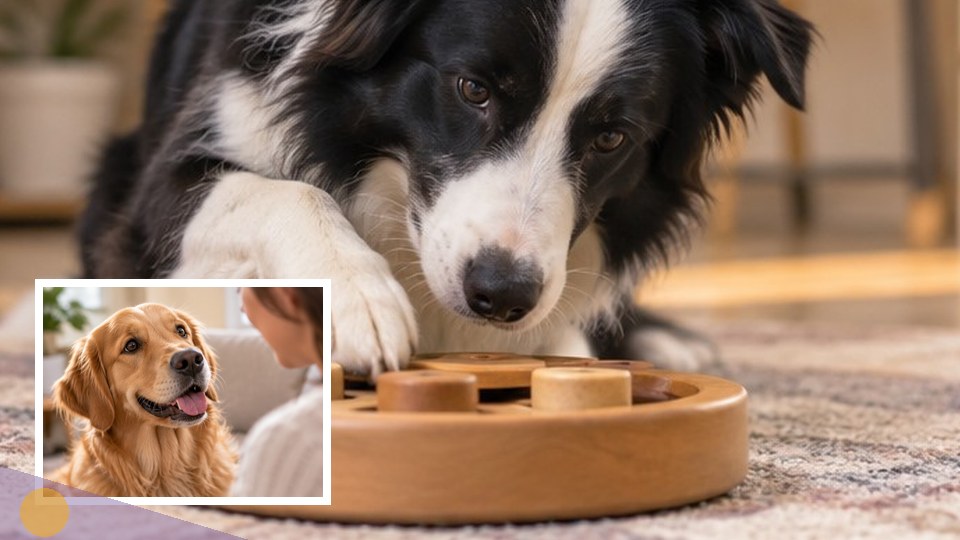
Dogs can show jealousy-like behavior when a valued social partner gives attention to someone else. Researchers debate how closely the internal experience matches human jealousy, but the behavior itself is well documented.
Dogs can show jealousy-like behavior when a valued social partner gives attention to someone else. Researchers debate how closely the internal experience matches human jealousy, but the behavior itself is well documented.
What is probably going on?
Dogs have emotional systems that support attachment, fear, excitement, frustration, and social behavior. The harder question is whether a dog experiences a complex emotion in exactly the same reflective way a person does. Usually, science can answer the behavior question more confidently than the inner-experience question.
What should you look for?
Instead of relying on one expression, look for a pattern: body tension, movement, appetite, sleep, vocalizing, proximity-seeking, avoidance, and how quickly the dog returns to normal. Those details tell you much more than a single “look.”
If an emotional-looking behavior is intense, persistent, or suddenly different from your dog’s normal pattern, consider stress, pain, and other health factors as well as emotion.
What this means for you
Use the answer to do dogs feel jealousy as a starting point, not a label for every dog. Compare the behavior with your dog’s normal routine, temperament, recent experiences, and the situation in which it happens. When the pattern is relaxed and predictable, it is usually most useful to respond calmly and consistently.
Evidence & sources
Evidence note: Research can measure behavior and physiology, but it cannot directly tell us exactly what a dog privately experiences. The answer separates observed behavior from human interpretation.
Last reviewed: September 19, 2026