
Dog & Human Bond
Why does my dog sleep against me?
Sleeping close can provide warmth, security, familiar scent, and social contact. For many dogs it is a normal attachment behavior rather than a sign of…
Read the answer →103 published answers across behavior, emotions, communication, memory, learning, and the human-dog bond.
Sleeping close can provide warmth, security, familiar scent, and social contact. For many dogs it is a normal attachment behavior rather than a sign of…
Read the answer →
Dogs do not naturally interpret a human kiss the same way people do, but many learn that kisses from a trusted person predict affection and…
Read the answer →
Most dogs do not behave as if they recognize a visual reflection as “self” in the classic mirror test. Because dogs rely heavily on smell,…
Read the answer →
Dogs can learn your usual return schedule and notice environmental cues that happen before you arrive. Familiar sounds and scents may also help, but there…
Read the answer →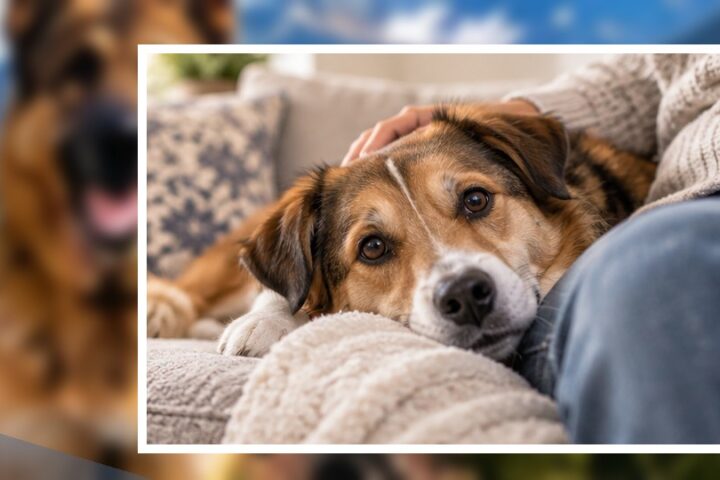
Bringing a toy can be an invitation to play, a learned way to get attention, or part of a dog's natural retrieving and carrying behavior.…
Read the answer →The classic “guilty look” is more closely linked to a dog reacting to a person’s tone, posture, or expectation of trouble than to proof of…
Read the answer →
Dogs go through sleep stages that include REM sleep, the stage strongly associated with dreaming in humans. Movements and vocalizations during REM suggest that dogs…
Read the answer →
Dogs can learn associations between spoken words and actions, objects, places, or routines. Some dogs learn many word-object pairings, but most also rely heavily on…
Read the answer →
Head tilting may help a dog localize a sound, see a speaker's face more clearly, or respond to a familiar word or tone. A persistent…
Read the answer →
A relaxed sigh often appears when a dog settles down or gives up on getting something. Frequent or labored sighing can also occur with discomfort…
Read the answer →