
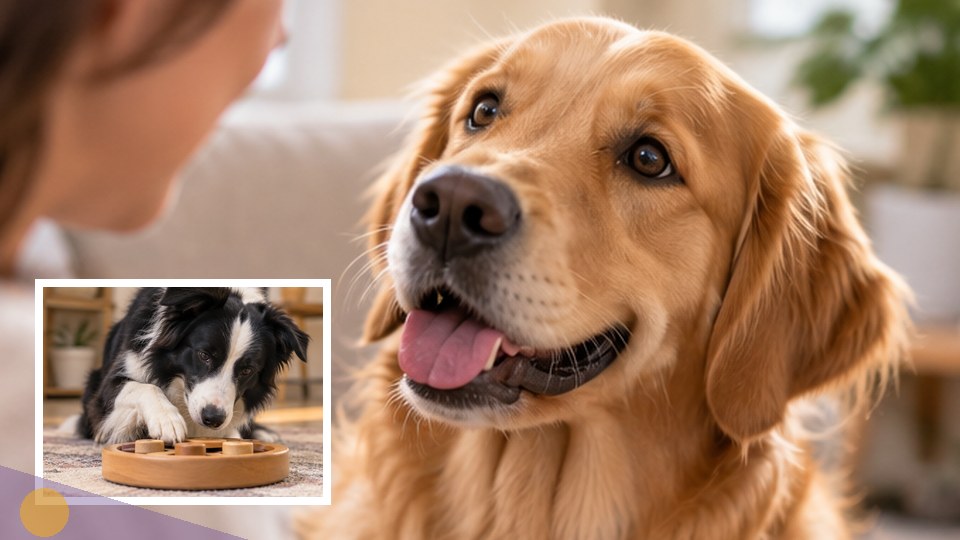
Ears held back can accompany friendliness, appeasement, fear, uncertainty, or concentration depending on the rest of the dog. Ear shape varies by breed, so use the whole body rather than one signal alone.
Ears held back can accompany friendliness, appeasement, fear, uncertainty, or concentration depending on the rest of the dog. Ear shape varies by breed, so use the whole body rather than one signal alone.
What is probably going on?
Dogs communicate with combinations of posture, movement, facial expression, gaze, vocalization, and distance. No single signal should be read in isolation. A wagging tail, for example, can occur with relaxed friendliness or high arousal depending on the rest of the body.
What should you look for?
Context matters because dogs are constantly adjusting to the person, animal, place, and outcome in front of them. The safest interpretation comes from watching several signals together and noticing whether the dog is moving toward interaction or trying to create space.
Give a dog more space when signals become tense, still, avoidant, or defensive. Respecting early communication is safer than waiting for growling, snapping, or a bite.
What this means for you
Use the answer to why does my dog pin its ears back as a starting point, not a label for every dog. Compare the behavior with your dog’s normal routine, temperament, recent experiences, and the situation in which it happens. When the pattern is relaxed and predictable, it is usually most useful to respond calmly and consistently.
Evidence & sources
Evidence note: Dog behavior is best interpreted from the whole context rather than a single gesture. Breed tendencies, learning history, health, stress, and the immediate environment can all affect what you see.
Last reviewed: September 19, 2026