
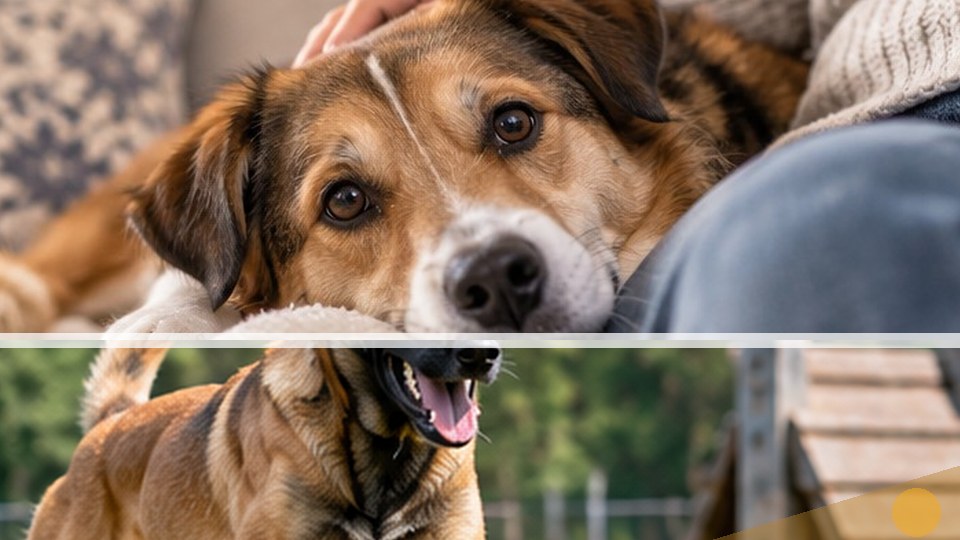
Dogs may pant from excitement, stress, pain, medication effects, or medical problems as well as heat. Heavy, persistent, or unexplained panting—especially with weakness, pale gums, breathing difficulty, or collapse—needs prompt veterinary care.
Dogs may pant from excitement, stress, pain, medication effects, or medical problems as well as heat. Heavy, persistent, or unexplained panting—especially with weakness, pale gums, breathing difficulty, or collapse—needs prompt veterinary care.
What is probably going on?
A behavior change can be the first visible sign that a dog is uncomfortable. Pain, gastrointestinal upset, neurologic problems, hormonal disease, medication effects, anxiety, and environmental stress can overlap in the way they look at home.
What should you look for?
That is why timing and accompanying signs matter. Note appetite, drinking, urination, stool, breathing, mobility, sleep, and whether the behavior is getting better or worse. A short phone video can also help a veterinarian understand what you are seeing.
Seek urgent veterinary care for breathing difficulty, collapse, repeated vomiting, suspected poisoning, severe pain, seizures, inability to urinate, or rapidly worsening symptoms. When in doubt, call your veterinarian or an emergency clinic.
What this means for you
Use the answer to why is my dog panting when it is not hot as a starting point, not a label for every dog. Compare the behavior with your dog’s normal routine, temperament, recent experiences, and the situation in which it happens. When the pattern is relaxed and predictable, it is usually most useful to respond calmly and consistently.
Evidence & sources
Evidence note: Behavior changes can have behavioral or medical causes. This answer is educational and does not diagnose a condition; persistent, severe, or sudden changes should be discussed with a veterinarian.
Last reviewed: September 19, 2026